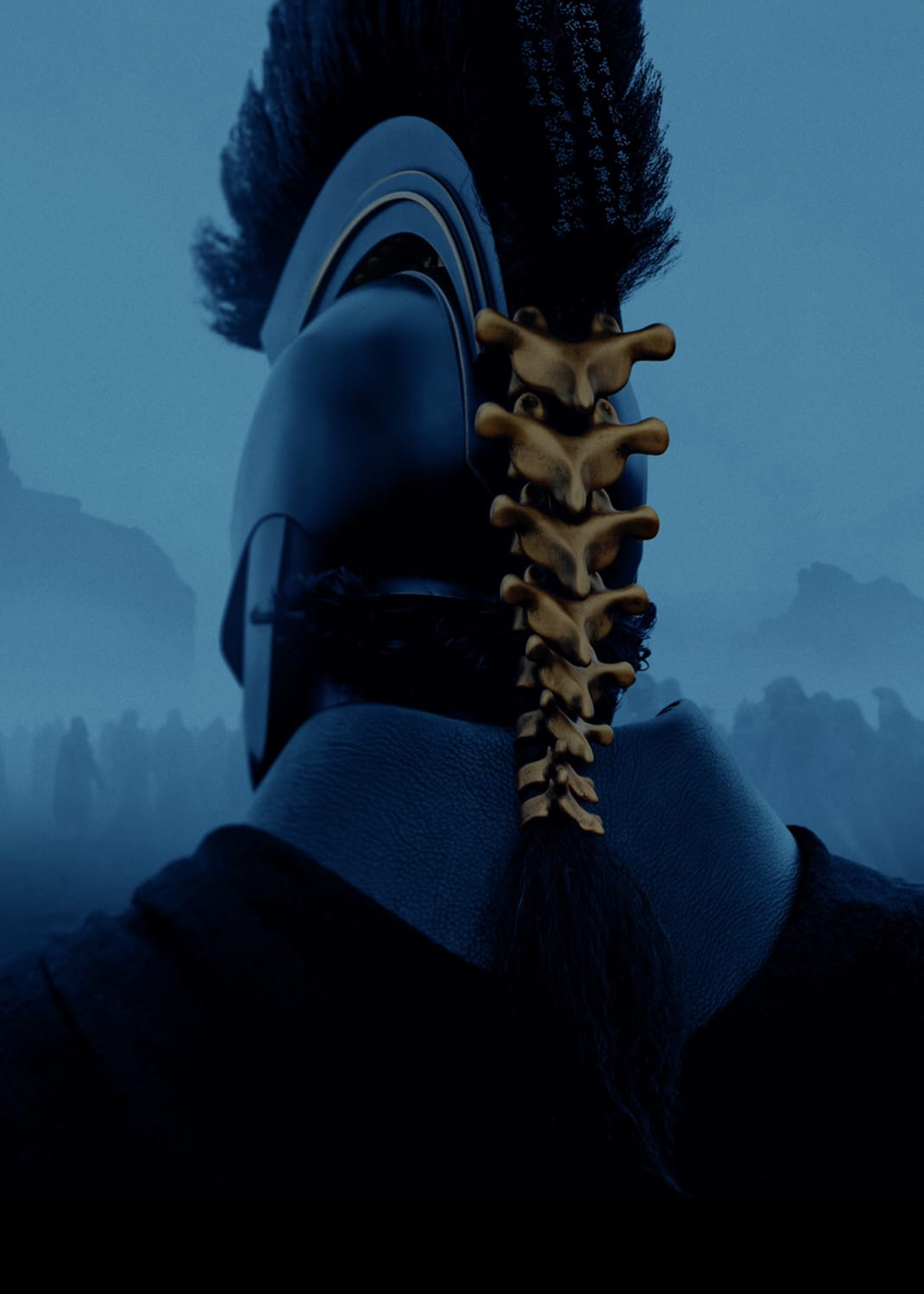
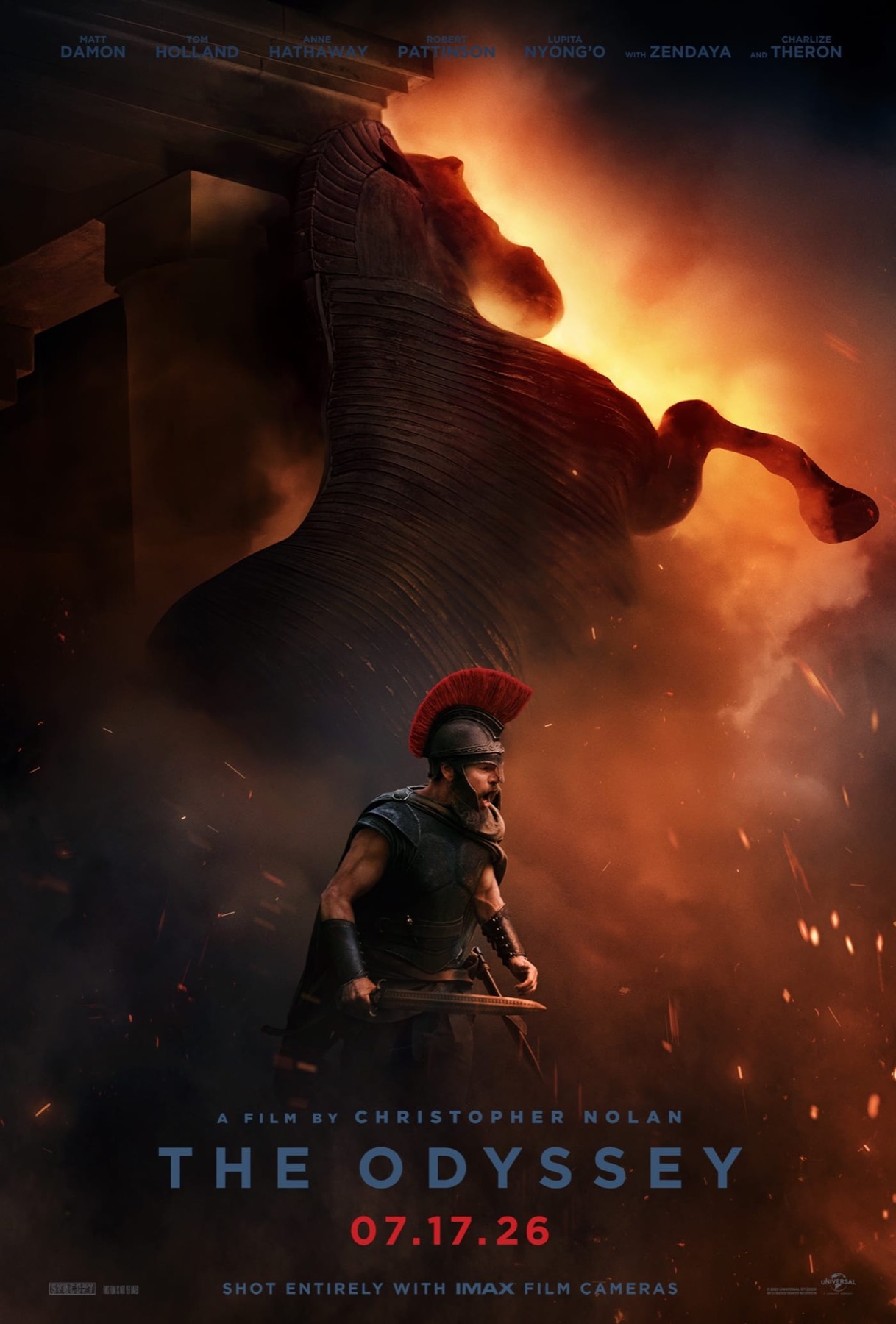
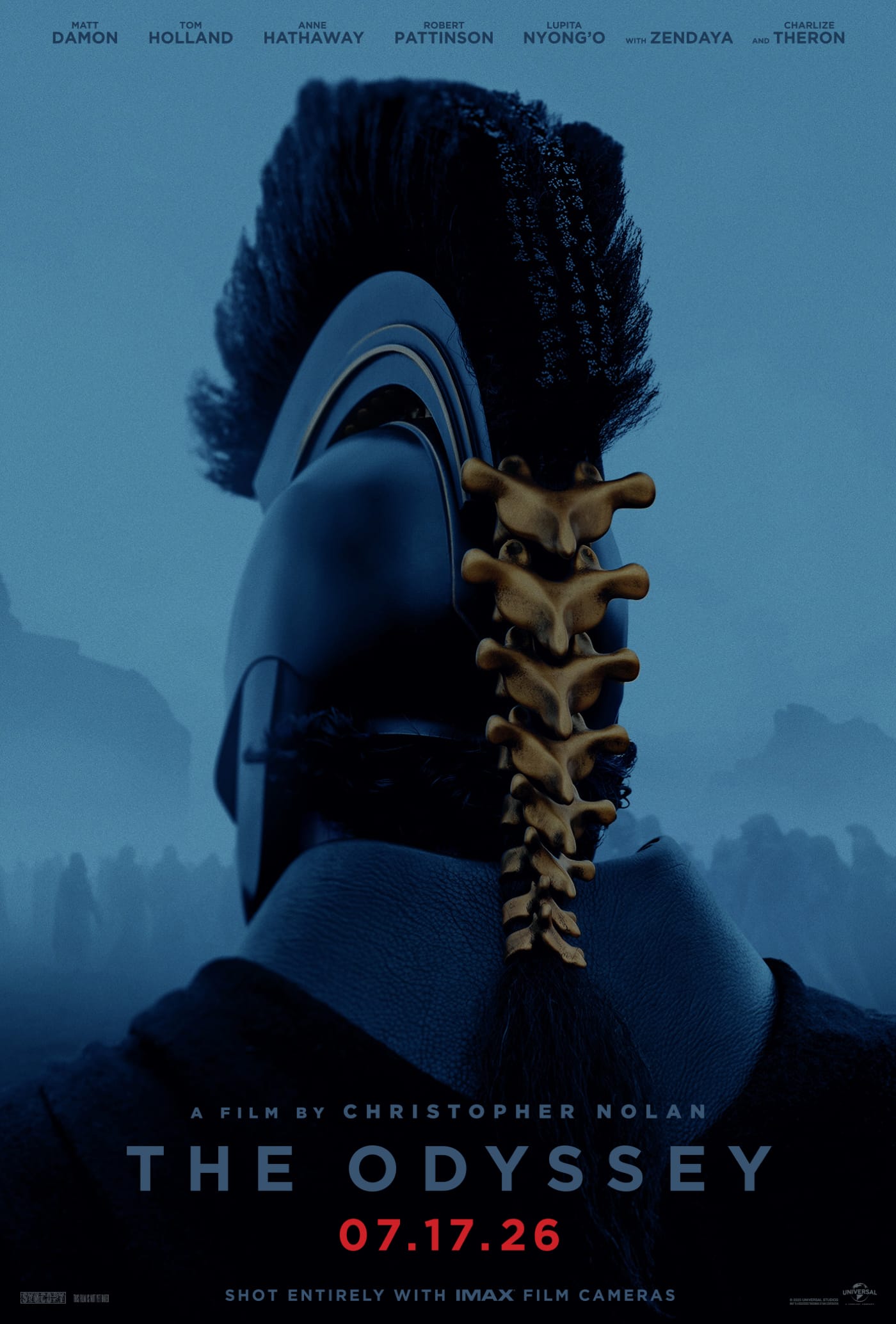
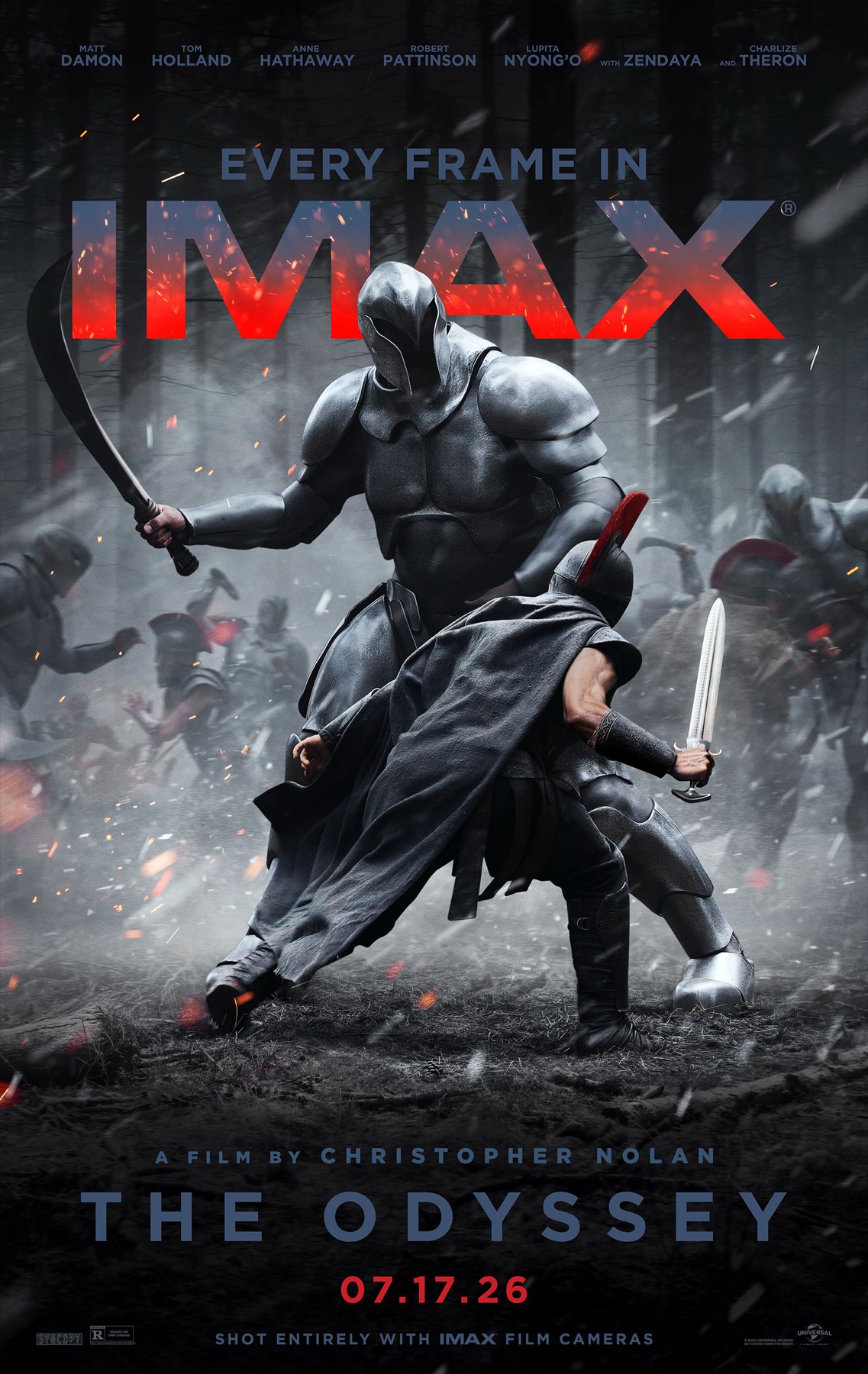
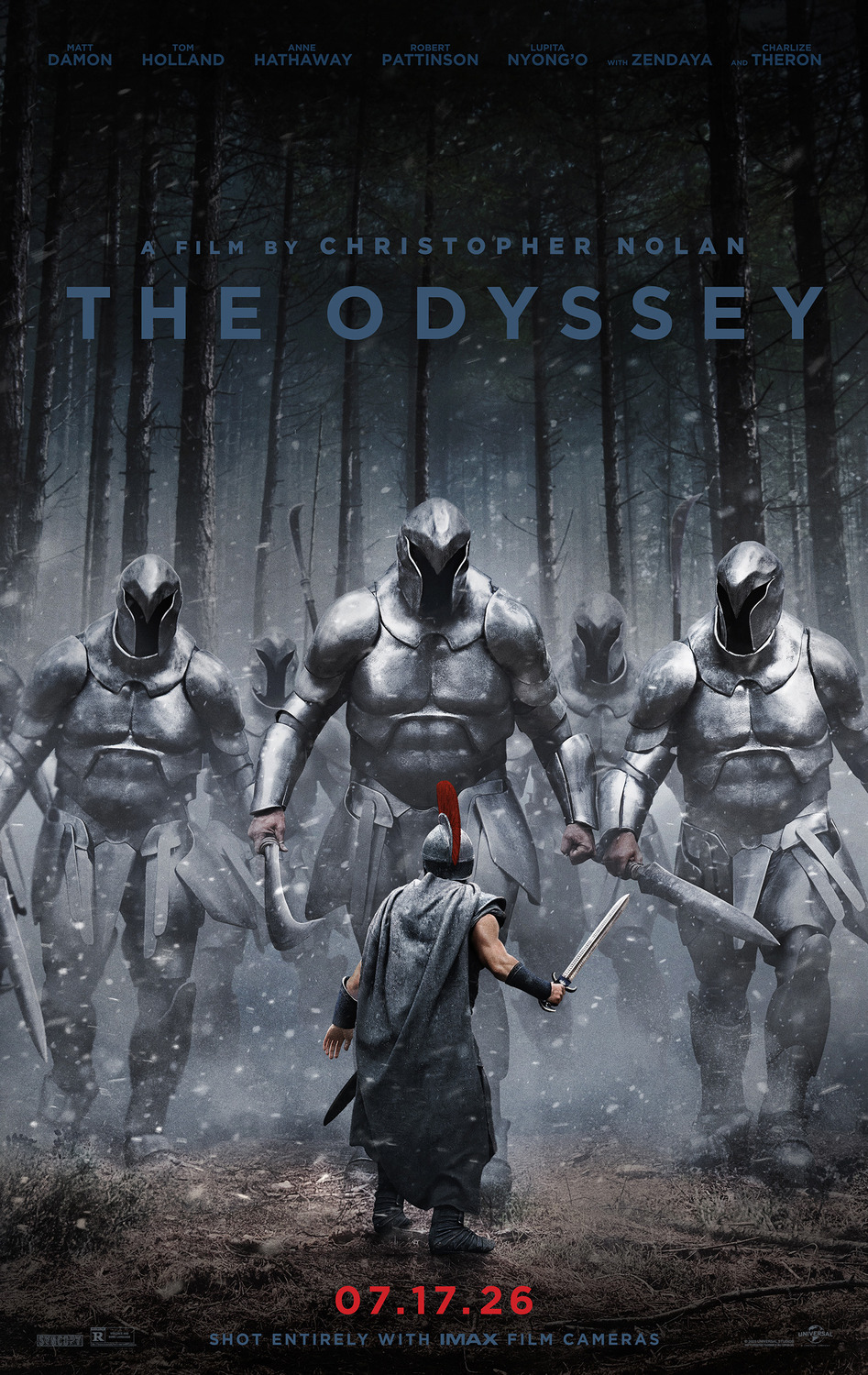
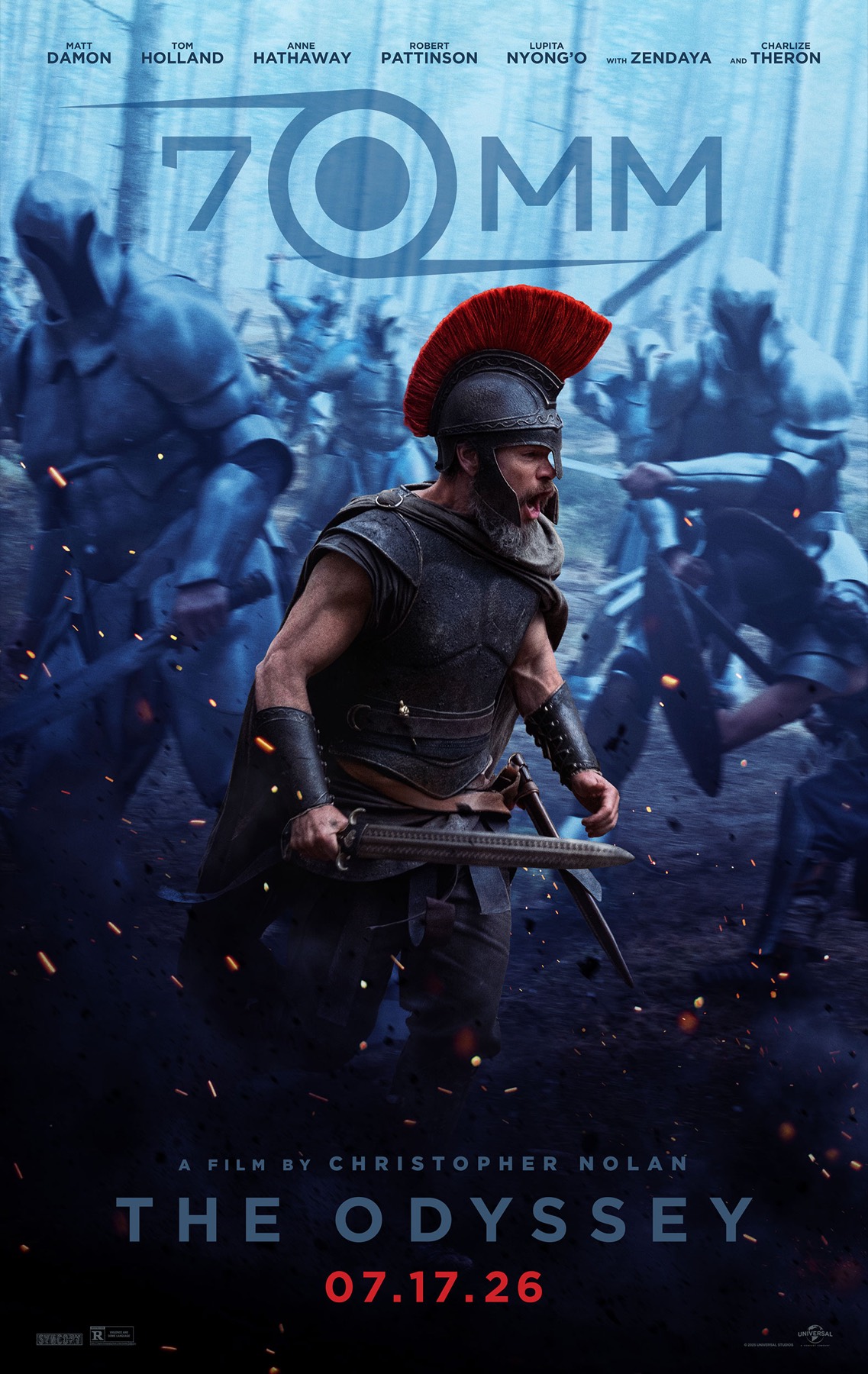
On December 23, 2024, Universal announced “a mythic action epic shot across the world using brand new IMAX film technology.”1 Behind that single sentence sat a fixation more than twenty years old. Nolan calls the absence of a big-studio Odyssey an “odd gap in movie history” and says the near-billion-dollar success of Oppenheimer finally “gave me options.”2 He had circled Homer before: in talks to direct 2004’s Troy, he now admits he was “a little over my head.”2 From that abandoned project he kept one image, carried across two decades: a Trojan Horse that is not a proud monument but a half-sunk wreck in the surf: soldiers packed inside, breathing through straws as the tide rises. A horse the sea is reclaiming, he reasoned, is one the Trojans would rush to salvage and drag inside their own walls.2
The obsession is older still. Nolan first met the story at about age five, watching older schoolchildren stage it: the horse, the man lashed to the mast, images that lodged and never left. When he finally sat down to adapt it, he began by writing out everything he half-remembered and wanted to see, before rereading a single translation: the Cyclops, the lotus flower, the touchstones a general audience carries without knowing where they came from.64
Cracking the Poem
The structural insight came from reading like a screenwriter. The poem, Nolan realized, “is all payoffs, but it doesn’t have the setups.” Homer’s audiences already knew the story, so nothing is foreshadowed. Building the missing setups inside the poem’s architecture is, he says, what “cracked it open” for him.4 He read the translations over and over, then set them all aside and worked “from intuition… as if it’s frankly something I’m making up,” the only way, he felt, to truly own it.14 From Wilson he took the character’s core: a liar who promises to tell the whole truth.2 His shorthand for the challenge is pure film history: a slick, clever Han Solo works as a supporting character. The trick was building a film where the Han Solo figure is the hero.2
An Earthy Narrative
The film’s most argued-over choice is its language: plain, modern, American-accented English. Telemachus says “Dad,” not “Father.”9 Nolan wanted “language that has emotional not intellectual meaning to people,” and knew the risk: “I was maybe being naïve, it might bite me on the ass, but I wanted an earthy narrative. To me it was a no-brainer.”9 The casting follows the same logic: iconic faces doing the work of familiar speech.9 To those who call it sacrilege he offers a history lesson: Homer was “the Marvel of its day,” his heroes “the original superheroes.” In his words, “a lot of comic book culture… comes pretty directly from Homer’s epics.”7 Out of the poem’s code of sacred hospitality, in which a god may be hiding in any beggar, he distilled the film’s ethic, renamed on screen as “Zeus’s law.”14
The Intense Version
Nolan told Universal from the outset he would make “the most intense version of The Odyssey,” and pushed for the R rating himself: a PG-13 telling would have been “potentially compromising.”13 His visual touchstones reach outside Hollywood entirely: Tarkovsky’s Andrei Rublev and Kurosawa’s Ran.5 The gods themselves never literally appear: to a Bronze Age mind their evidence was everywhere, in thunder and rain and the rising sun, and Nolan judged that putting the audience on the deck, fearing Poseidon alongside the crew, would beat any bearded figure on a mountain.2 Even the runtime is physical: an IMAX film projector holds just under three hours of film, so the cut runs 172 minutes. In Nolan’s words, “an epic film, as the subject matter demands, but it is shorter” than Oppenheimer.10
The page itself drew the cast before the cameras did. “Every script, I mean, I’ve read three of them now, they are phenomenal pieces of writing, and they’re all built like a Swiss watch,” says Matt Damon, on his third Nolan film.21